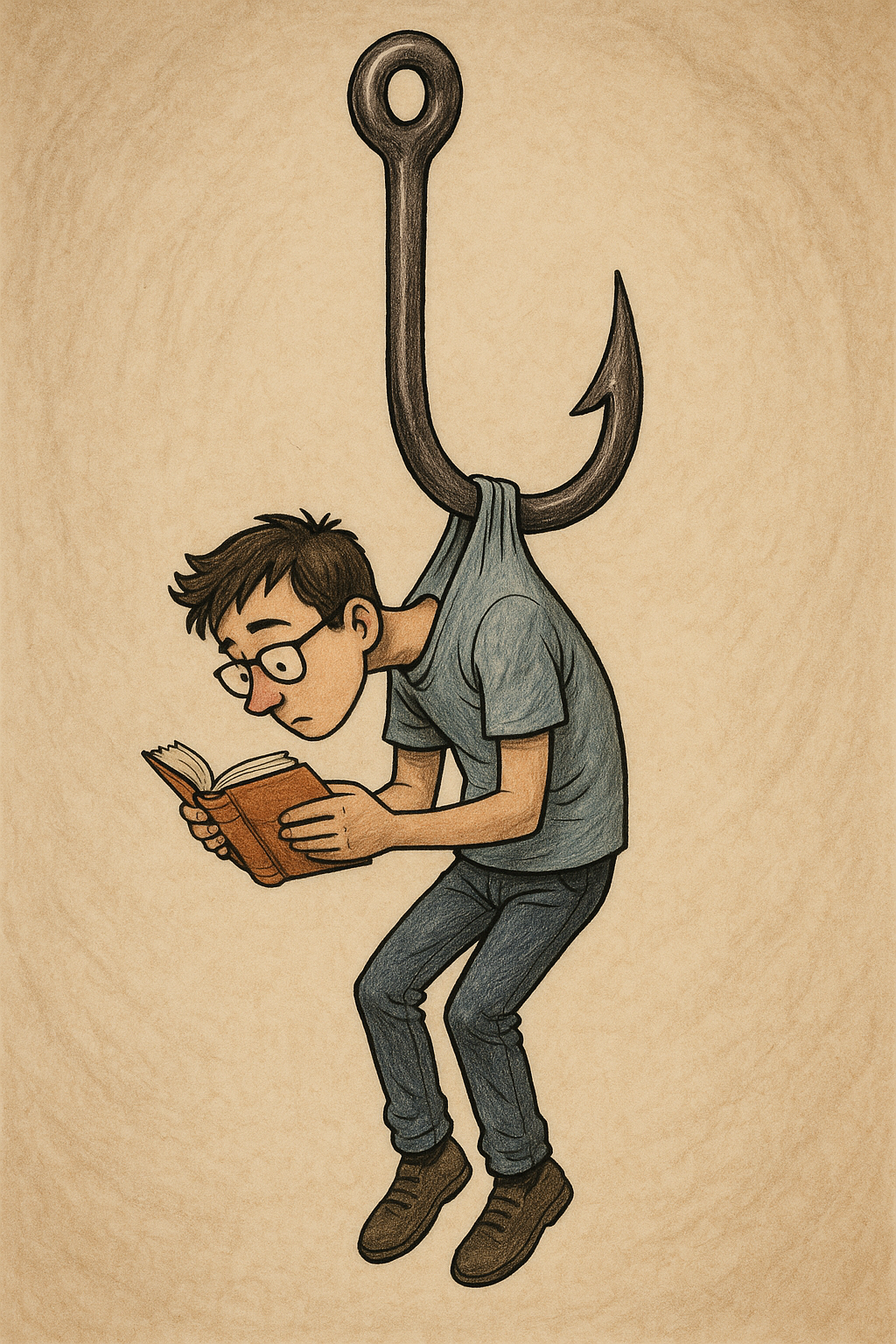
When you go fishing, you need a hook to catch a fish. In a similar way, you need a hook to “catch” the attention of your reader.
You need something that grabs them by the throat and forces them to keep on reading. Because they’ll never get the time they spent reading your book back, make it worth it.
What is a hook?
A hook is the first impression of your story on the reader. The first line, the first page, the first chapter—it has to get a reader invested or else they won’t keep reading. Your hook should catch your reader’s attention and draw them into the world of your story. Typically, the hook happens within the first page–or even the first paragraph, acting as a quick attention-grabber.
Typically, the hook happens within the first page–or even the first paragraph, acting as a quick attention-grabber.
Now that I know what a hook is, how do you write a good one?
Writing a good hook is harder than you might think. You’ve got to grab your reader as quickly as possible. That’s why first lines tend to be a common hook. It’s simple and— if done right—effective.
One of the best ways to master the art of writing an excellent first line is reading and, of course, practicing.
There are two principles that are evident in most well written and captivating first lines.
First- Set up conflict.
Setting up conflict does not mean that you have to introduce your villain and explain everything wrong that’s happening. No, setting up conflict means hinting at trouble; whispering to your reader that something bad is coming.
Setting up conflict means hinting at trouble; whispering to your reader that something bad is coming.
See if you can spot the conflict set up in this first line from Fawkes by Nandine Brandes:
“I wasn’t ready to turn to stone.”
The conflict introduced here, is the fact that the protagonist is going to be turned to stone. It creates a sense of urgency and shows us this character’s in trouble. It may not be the main focus of the book, but nonetheless, it’s a problem.
Here’s another example from Wayne Thomas Batson’s novel, The Door Within:
“The first sword missed Aidan’s head by an inch.”
In this example the conflict is shown through the sword barely missing Aidan’s head. He’s not only in a sword fight, but he almost died. The sword only missed his head by an inch. It hints at the idea that the main character is in grave danger.
Do you see how easily you can include conflict in your opening line? It can be subtle, but it must be there. It must hint at the trouble happening or to come.
Do you like chocolate chip cookies? Well not putting conflict in your first line is like forgetting to put the chocolate chips in the cookies. Sure, it’s edible, but it isn’t as good.
Second- Evoke Curiosity.
The second crucial part to creating a captivating first line is evoking curiosity. Make your reader curious and leave them with unanswered questions. Curiosity is what will drive readers to the next sentence, then the next page, and then the next chapter.
They need a reason to keep reading and have questions that need answering. Most good first lines leave the reader with a question and take advantage of their curiosity.
Author Andrew Klavan exemplifies this in the first line of his novel, Crazy Dangerous:
“You see that dead guy by the side of the road?”
This line works so well because of the questions it arouses.
Who is this dead guy?
Why is he by the side of the road?
Why is he dead?
These questions are what pull us into the book. We keep reading, because we want answers.
If you didn’t notice, Mr. Klavan induces the questions through the conflict. Think about it: the dead guy, by the side of the road, is what evokes our questions, yet it’s also what introduces the conflict. It’s because of the conflict, that questions are asked.
At the risk of redundancy, let’s look at one more example. Author Lemony Snicket wrote the bestselling series: A Series of Unfortunate Events. In the first book, A Bad Beginning, he opens with this line:
“If you are interested in stories with happy endings, you would be better off reading some other book.”
After reading this opening line, are you curious? What questions come to your mind?
Clearly, this book does not have a happy ending, and therein lies the conflict. Bad things are promised to happen. That’s what leads us to ask the question: “What bad things are going to happen?” As curious human beings, we must know what bad things will happen. It’s our human nature.
If you scrolled all the way to the bottom without reading anything else- here should be your take away from this blog post-


Leave a Reply